- U.S. holiday retail sales are projected to grow almost 5% and pass $1 trillion for the first time in 2026, according to Bain & Company cited by CNBC, but most of that increase comes from inflation.
- A 10-person Thanksgiving dinner rose 6% to $58.63 (American Farm Bureau Federation), Thanksgiving roundtrip airfare is up about 31% (Hopper), and winter home heating bills are expected to rise 7% past $1,000 (NEADA).
- About one-third of Americans expect to take on holiday debt — up roughly 74% from 2025, according to a TSG and Electronic Transactions Association survey.
What happened
U.S. retail sales this holiday season are projected to rise almost 5% and pass $1 trillion for the first time, according to Bain & Company data reported by CNBC’s Alex Harring on Wednesday, November 25, 2026. Yet Bain noted that most of that dollar increase comes from inflation rather than shoppers buying more items, while Citi said Wednesday that spending growth is mainly driven by higher earners in a “K”-shaped economy.
According to the Bureau of Labor Statistics (BLS), the consumer price index reaccelerated after the U.S. first struck Iran in late February, with annual inflation rising faster than wages, CNBC reported. Only 16% of respondents in a Morning Consult survey planned to spend more this holiday season than last year. A poll by consulting firm TSG and the Electronic Transactions Association (ETA) found 5% of Americans plan to buy no presents at all — up 3 percentage points from 2025 — while about one-third expect to go into holiday debt, a roughly 74% increase from last year.
IN THEIR OWN WORDS
Eight shoppers, economists and aid leaders on 2026 holiday costs · reported by CNBC, Nov 25, 2026
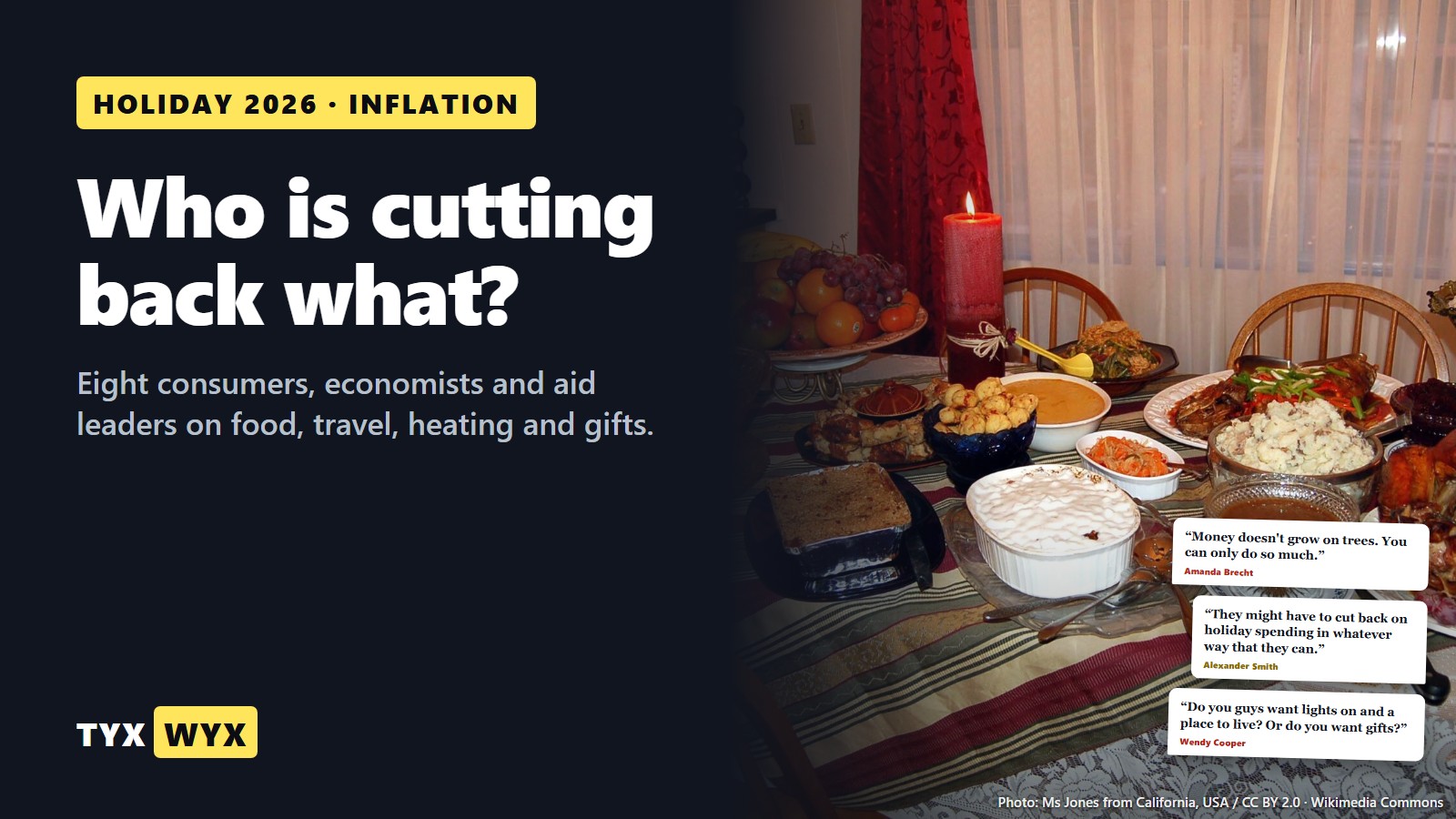
“Money doesn't grow on trees. You can only do so much.”
to CNBC, Nov 25
“You have to weigh: Do you guys want lights on and a place to live? Or do you want gifts?”
to CNBC, Nov 25
“They might have to cut back on holiday spending in whatever way that they can.”
to CNBC, Nov 25
“People feel horrible that they have to go to that because the price of everything has just risen so significantly over the past five years.”
to CNBC, Nov 25
“There will be a significant shell shock when they see the price of traveling”
to CNBC, Nov 25
“It's almost true economically as well. As inflation is rising, people are being a little bit more cautious about what they're buying.”
to CNBC, Nov 25
“We want to make sure that our food banks are as full as they possibly can be going into the holiday season”
to CNBC, Nov 25
“Why isn't the federal government helping families pay these higher bills?”
to CNBC, Nov 25
All quotes are verbatim from CNBC’s Nov 25, 2026 report by Alex Harring.
At the dinner table and the toy aisle: $58.63 feasts and 9% pricier toys
A 10-person Thanksgiving dinner rose 6% to $58.63 in 2026 due to higher labor and transportation costs, according to the American Farm Bureau Federation’s annual survey cited by CNBC. Overall food prices have jumped around 24% over the last five years, with coffee and ground beef each up more than 40%, according to the BLS. Grocers like Walmart and Aldi have pitched discounted bundles — Walmart’s promises to feed 10 for $35 — though RSM chief economist Joe Bruseulas said some consumers will feel disappointed by having less choice in their menus.
In the gift aisle, toy prices climbed more than 9% over the past year to their highest level since 2019, according to the BLS. Independent toy analyst Chris Byrne told CNBC that higher transport and plastic costs, plus the artificial intelligence boom driving up prices for chips inside gaming devices and electronics, are pushing shoppers to favor quality over quantity.
Fuel, flights, heating oil and food banks
Energy costs following the war with Iran have hit both travelers and stay-at-home families, CNBC reported. AAA expects slightly fewer Americans to travel at least 50 miles for Thanksgiving — the first year-over-year drop since the 2020 pandemic lockdown — with gasoline prices up about 18% from a year ago. Booking platform Hopper reported that roundtrip domestic airfare is up about 31% around Thanksgiving and 23% around Christmas, pinched further on routes once flown by budget carrier Spirit, which shut down in May.
Staying home carries its own bill. The National Energy Assistance Directors Association (NEADA) expects the average household to spend 7% more on winter heating — about $66 extra, pushing the typical seasonal bill past $1,000. Heating oil, used mainly in the Northeast, has jumped around 70% year over year, while natural gas costs about the same as last year. Meanwhile, after millions of Americans lost SNAP benefits under policy changes in President Donald Trump’s “big beautiful bill,” the Salvation Army said some of its food banks distributed double or triple the groceries in October compared with a year earlier, leaving Feeding America’s Linda Nageotte warning that “Far too many of them have empty shelves.”
What it means for your wallet
Stretching a household budget this season is like packing for a winter trip after the airline shrinks the carry-on size: something that fit last year has to stay behind. In CNBC’s report, households described concrete trade-offs rather than one single formula:
- Menu swaps: Skipping road trips across Michigan, dropping appetizers, serving turkey breast instead of a whole bird, or buying a $35 meal bundle for 10.
- Gift caps and secondhand hunting: Setting a one-gift limit per adult child, browsing discount chains like Five Below or thrift stores, listing clothes on resale platforms, and delivering DoorDash orders to save up for kids’ presents.
- Booking early: Locking in holiday flights earlier than in past years as airfare climbs.
What we still don’t know
- Whether Black Friday and December promotions will ease price pressure enough to reduce the one-third of shoppers who expect to take on holiday debt.
- Whether federal heating assistance or food bank supplies will expand if winter heating oil and grocery prices remain elevated.